

THE 2026 NEUROBEHAVIORAL PHASE
Why the body must catch up to consciousness
When people change their behavior, routines, priorities, beliefs, or identity structures, as many did in 2024–2025, the brain must reorganize. Learned behaviors are not just habits; they are synaptic networks reinforced by repetition, emotion, and reward. When those behaviors are no longer enacted, the brain does not immediately replace them. It dismantles them.
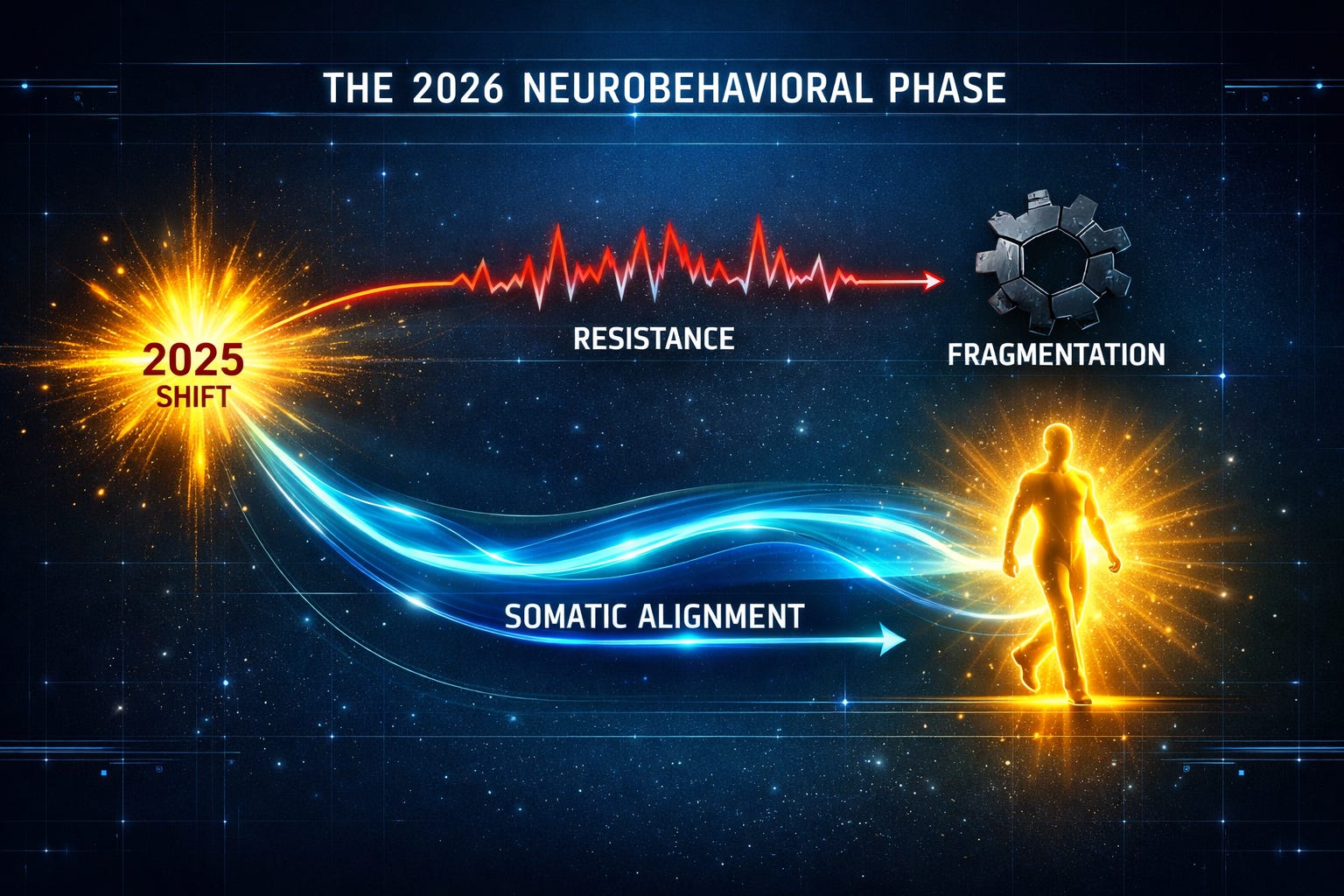
Neuroscience describes this as synaptic pruning and network reweighting. Connections that are no longer useful weaken and are eventually removed. This process is metabolically expensive. It increases sleep pressure, slows motivation, and creates a sensation of cognitive heaviness or fatigue. Sleep lengthening and difficulty waking are consistent with this kind of large-scale neural reorganization.
In that sense, 2026 can be understood as a consolidation year. Not a year of new acceleration, but of clearing. The nervous system prioritizes restoration, memory reprocessing, and internal recalibration over outward productivity. People feel “behind” not because they are failing, but because the internal architecture that previously supported effort is being dismantled before a new one is fully online.
Exhaustion, extended sleep, and low urgency are expected features of this phase. They indicate reduction, not collapse. The system is conserving energy while it removes outdated neural scaffolding. Once pruning stabilizes, capacity typically returns, but reorganized around different values, rhythms, and tolerances than before.
This is not everyone’s experience, but it is coherent for many, especially those who underwent major behavioral, psychological, or meaning-level shifts in the prior year.


